
Real Answers to Real Questions About Exterior Work in Wisconsin.
Wisconsin winters are hard on homes. Get straight answers about decks, siding, windows, doors, and soffit and fascia from a contractor who works in this climate every day.
Wisconsin Climate and Your Home Exterior
Why does my siding, deck, or window seals keep failing every few years no matter what I do?
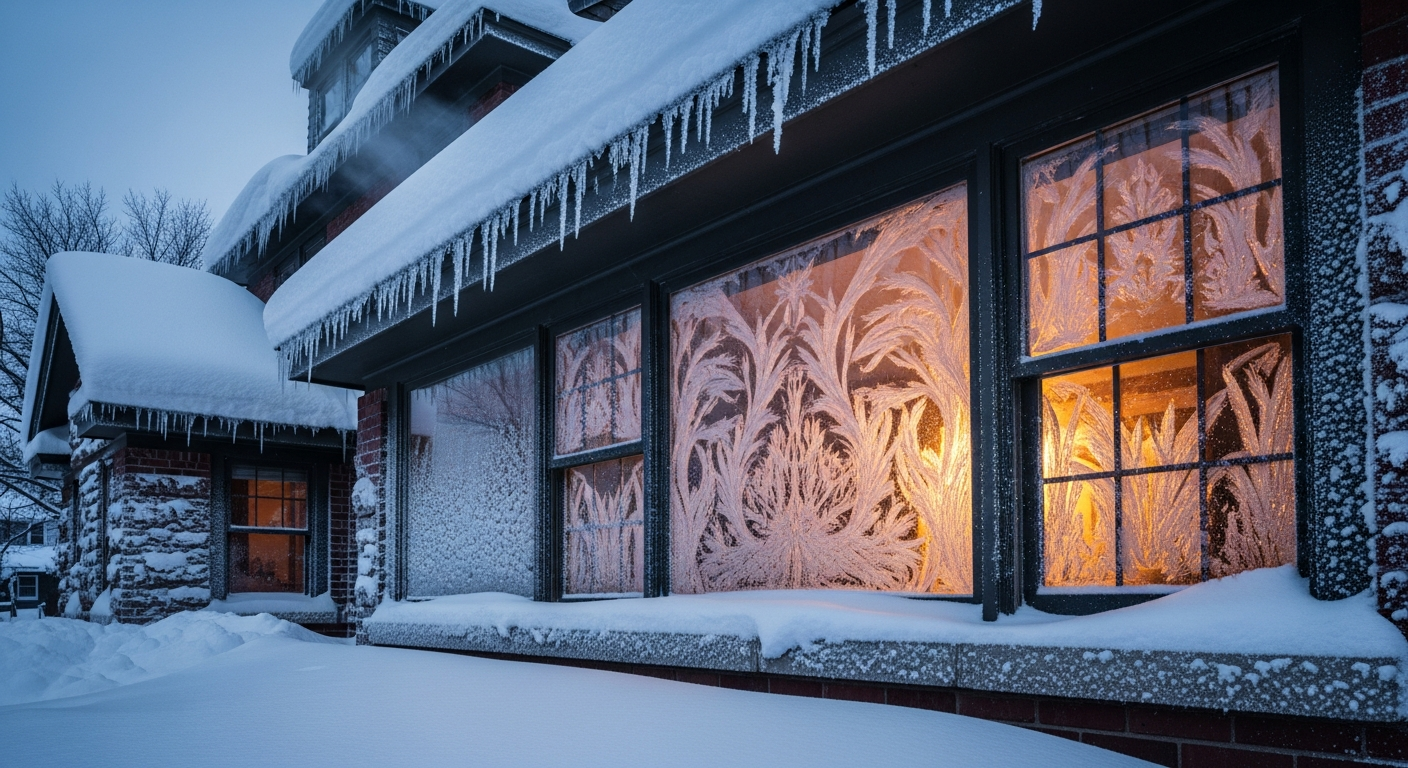
Every Wisconsin winter puts your home through hundreds of freeze-thaw cycles. Water gets into small gaps, cracks in caulk, and failed window seals. When it freezes it expands and forces those gaps wider. When it thaws, the water goes deeper. Over five to ten winters this turns small maintenance issues into structural problems: warped siding, failed window seals, rotted fascia boards, and decks that start to move and creak. The fix is always cheaper than the damage it prevents.
My house is near a lake or river, does that make exterior damage worse?
Yes. Homes within a quarter mile of the St. Croix River, the Mississippi, Lake Menomin, or any significant body of water deal with elevated humidity and increased moisture exposure. That moisture accelerates rot in wood components, drives condensation in window frames, and stresses siding joints and caulk. Homes in these locations benefit from fiber cement siding over vinyl, aluminum fascia over painted wood, and composite decking over pressure treated where minimizing long-term maintenance matters.
I keep seeing ice buildup along my roofline every winter, what's actually causing that?
Ice dams form when heat escapes through your roof and melts the snow above it. That meltwater runs down to the cold eave overhang and refreezes. The ice backs up behind itself and eventually water finds its way under shingles and into your wall cavity. Ice dams are a symptom of inadequate attic insulation and poor ventilation, not just a roofing problem. Properly vented soffit panels are part of the solution, letting cold air in and warm air out to keep the roof deck temperature consistent.
My deck feels soft, warped, or unstable, is that just normal wear from Wisconsin winters?
Pressure treated wood decks deal with heavy snow loads, standing water from snowmelt, and the same freeze-thaw cycling that affects everything else on your home's exterior. A properly built deck with the right fasteners, adequate spacing between boards for drainage, and a good initial seal will handle Wisconsin winters for 20 plus years, whether it's in Hudson, River Falls, or anywhere else across the St. Croix Valley. A properly built deck with wrong-grade lumber, inadequate joist spacing, or no attention to drainage starts showing rot and movement in five to seven years. The difference is in how it's built, not just what it's built from.
Do I really need better windows here, or is that just an upsell for colder climates?
Wisconsin winters routinely hit negative 20 to negative 30 degrees with wind chill. At those temperatures single pane windows are essentially a hole in your wall from an energy standpoint. Even older double pane windows with failed seals lose most of their insulating value. Modern low-E triple pane or high-performance double pane windows maintain their seal and insulating gas at those temperatures and make a measurable difference in heating costs, most noticeably on north and west facing exposures that take the full force of winter wind.
Windows and Doors
There's fog or haze building up between my window panes, is that actually a problem?
Yes, and it's not something you can wipe away. That haze means the sealed unit has failed, the insulating gas has escaped, and the window's no longer performing the way it was designed to. Cleaning won't fix it, the glass unit needs to be replaced. Other signs point the same direction: frost on the inside of the glass in winter, drafts near a closed window, or frames that have gone soft or discolored from moisture getting in.
I keep hearing about low-E glass, is it actually worth paying for in Wisconsin?
Yes. Low-E stands for low emissivity, a microscopic coating on the glass that reflects heat back toward its source. In winter that means your indoor heat stays inside instead of bleeding out through the window. In Wisconsin, where winter performance is what actually matters, low-E isn't an upgrade, it's the baseline. Skipping it on a replacement window is leaving performance on the table for no real savings.
Is a fiberglass entry door worth the extra cost over steel in Wisconsin?
For most Wisconsin homeowners, yes. Steel doors are solid and less expensive but they are prone to denting and conduct cold at a higher rate than fiberglass. Fiberglass doors do not dent, do not warp or swell with seasonal moisture changes, and have lower thermal conductivity, meaning less cold transfer through the door in winter. Most homeowners replacing a door they intend to keep for 20 plus years are better served by fiberglass.
Are there Wisconsin programs that help pay for window or exterior replacement?
Yes. Several programs are worth knowing about. Focus on Energy is Wisconsin's statewide energy efficiency program and offers rebates for qualifying energy improvements. The HOMES and HEAR rebate programs funded through the Inflation Reduction Act are active in Wisconsin and provide rebates based on household income and energy improvement results. WHEDA, the Wisconsin Housing and Economic Development Authority, offers below market rate home improvement loans between 10,000 and 50,000 dollars for qualifying homeowners. USDA Section 504 provides loans and in some cases grants for low income homeowners in rural areas like much of Pierce, St Croix, Polk, and Dunn counties. Start at focusonenergy.com or call 2-1-1 for referrals to local programs. Shane can also walk you through financing options if a rebate program doesn't cover the full cost.
My front door feels drafty even when it's shut, what's causing that?
A draft with the door fully closed almost always points to a failed weatherstrip seal, a warped door slab, or a frame that has shifted enough to break the seal. Wood doors are especially prone to this in Wisconsin as they swell and shrink with seasonal moisture changes, eventually losing their tight fit. Fiberglass and steel doors hold their shape better through those swings, which is why they seal more consistently through the coldest months.
Siding
My vinyl siding is from the 90s, is it actually failing or does it just look old?
Probably both. Quality vinyl siding installed correctly typically lasts 30 to 40 years, but the failure modes creep in well before that: UV fading, impact cracks, and caulk failure at the seams that lets moisture start working into the wall cavity. On Pierce and St. Croix County homes built before 2000, this is showing up consistently right about now. If your siding's original to the house, it's worth having Shane take a look at the actual condition, not just the age.
Should I go with vinyl or fiber cement siding for a home around Hudson or River Falls?
Depends on the house and the budget. Vinyl costs less, never needs painting, and handles Wisconsin winters fine when it's installed right. Fiber cement costs more upfront but holds paint longer, resists impact and moisture better, and looks sharper on higher-end homes, though it does need repainting every 10 to 15 years. For most mid-range homes in the Hudson and River Falls area, vinyl's the right call. For higher-value homes or anything close to a lake or river where moisture exposure is heavier, fiber cement earns its extra cost.
Can new siding go over old siding?
Sometimes, but Shane assesses the existing wall condition before recommending it. Installing new siding over old siding that has moisture damage or rot behind it locks that damage inside the wall where it continues to spread. If the existing siding and underlying sheathing are in solid condition, installing over the top can work. If there is any moisture damage, rot, or failing insulation behind the existing siding, it needs to come off first so the wall can be properly inspected and repaired before new material goes on.
My siding is cracking and warping, is that from the cold or something else?
Cold is usually a major contributor. Vinyl siding becomes more brittle at low temperatures and can crack from impact, expansion and contraction stress, or improper installation that didn't leave room for the material to move with temperature swings. Warping is more often caused by heat exposure or, on wood and engineered wood siding, moisture that got behind the panel. Either way, cracked or warped siding is a moisture entry point that gets worse each winter if left alone.
Why does my siding look faded and chalky after a few years?
That chalky, faded appearance is UV degradation, sun exposure gradually breaking down the surface pigment and finish of the material. It's more noticeable on south and west facing walls that get the most direct sun. While some fading is normal over decades, siding that fades significantly within just a few years often points to a lower quality product or a finish that wasn't rated for the UV exposure your home actually gets.
Decks
I'm building a new deck, wood or composite, what actually holds up better through a Wisconsin winter?
Both perform well when they're built and installed correctly. Pressure-treated wood costs less up front and lasts 20-plus years with proper installation and regular sealing. Composite costs more initially but skips the annual maintenance entirely, handles freeze-thaw cycling better, and won't splinter or check the way wood eventually does. It comes down to your budget and how much upkeep you actually want to do over the life of the deck.
Do I need a permit to build a deck in Wisconsin?
Most deck projects over a certain size require a building permit. Requirements vary by municipality and some townships have different rules than the city limits. Ward Exterior Works handles all required permitting as part of every deck build. Shane knows the local requirements in Pierce, St Croix, and Polk counties and takes care of the permitting process so you do not have to navigate the city or county building department yourself.
Is my deck actually safe under a heavy Wisconsin snow load, or could it collapse?
If it was built to code, yes. Wisconsin building codes require decks to be engineered for local snow load requirements, and western Wisconsin ground snow loads generally run 30 to 50 pounds per square foot depending on where you are. Shane designs every deck to meet or exceed that local requirement, so you're not left wondering whether your deck can handle it after a heavy snowfall. If you're not sure whether an existing deck was built to that standard, that's worth having checked.
My deck boards are cracking and splitting, is it too late to save it?
It depends on how widespread the damage is. If cracking and splitting is limited to a handful of boards, those individual boards can usually be replaced without rebuilding the whole deck. If the damage is spread across most of the surface, or if you're also seeing soft or rotting support posts and structural sag, that points to a deck nearing the end of its life rather than a simple repair. Shane inspects the full structure, not just the surface, whether it's a deck in River Falls or one out in Ellsworth, to give you an honest answer either way.
Why does my deck feel like it's moving or bouncing when I walk on it?
A deck that flexes or bounces underfoot is usually a sign of a structural issue, undersized joists, joists spaced too far apart, or a ledger board and footings that have shifted or weakened over time. This is not just a comfort issue, it's a safety issue, since it means the structure is no longer performing the way it was designed to. Shane inspects the framing and support structure during a free estimate to identify exactly what's causing the movement.
Soffit and Fascia
My fascia's decades old and still looks fine from the ground, do I actually need to replace it?
If it's aluminum and installed correctly, probably not yet, aluminum fascia is essentially permanent, doesn't rot, doesn't need painting, and handles freeze-thaw cycling without warping or cracking. The wood structure underneath it is what eventually fails if moisture gets behind the capping. The real risk is gaps at joints or transitions where water can sneak in unnoticed for years. If your fascia's original and you've never had it checked behind the surface, it's worth a look.
My gutters are pulling away from the house, is that a fascia problem?
Often, yes. Gutters attach directly to the fascia board. When the fascia rots, something Shane sees regularly on older homes in Hammond and throughout Pierce County, the gutters lose their anchor point and begin to separate from the roofline. Replacing the fascia is the actual fix in that situation, not re-hanging the gutters, since re-hanging gutters onto rotted fascia just delays the same failure from happening again.
I'm seeing water stains on my ceiling near the roofline, could that be a soffit or fascia issue?
Yes, that's a common sign. Water infiltration through failed soffit or fascia often shows up as staining on attic sheathing and insulation before it's ever visible inside the living space. If left alone, this leads to mold and structural damage over time. Catching it at the staining stage, rather than waiting for visible ceiling damage, saves significant repair cost.
Business and Licensing
Is Ward Exterior Works licensed and insured?
Yes. Ward Exterior Works LLC is fully licensed and insured. Shane carries all required Wisconsin contractor credentials and full liability insurance. You can ask for proof of insurance at any time before your project starts.
How do I get a free estimate from Ward Exterior Works?
Call or text Shane directly at 715-808-5260 or use the estimate form on this site. Shane will schedule a time to walk the project with you anywhere across western Wisconsin, assess the scope of work, and give you a detailed written estimate at no charge. No pressure, no sales pitch, just a straight answer on what the job will cost.
Still Have Questions? Call Shane Directly.
No call centers, no dispatchers. Shane picks up or calls back fast. Ward Exterior Works is based in Hammond WI and serves homeowners across western Wisconsin.
