
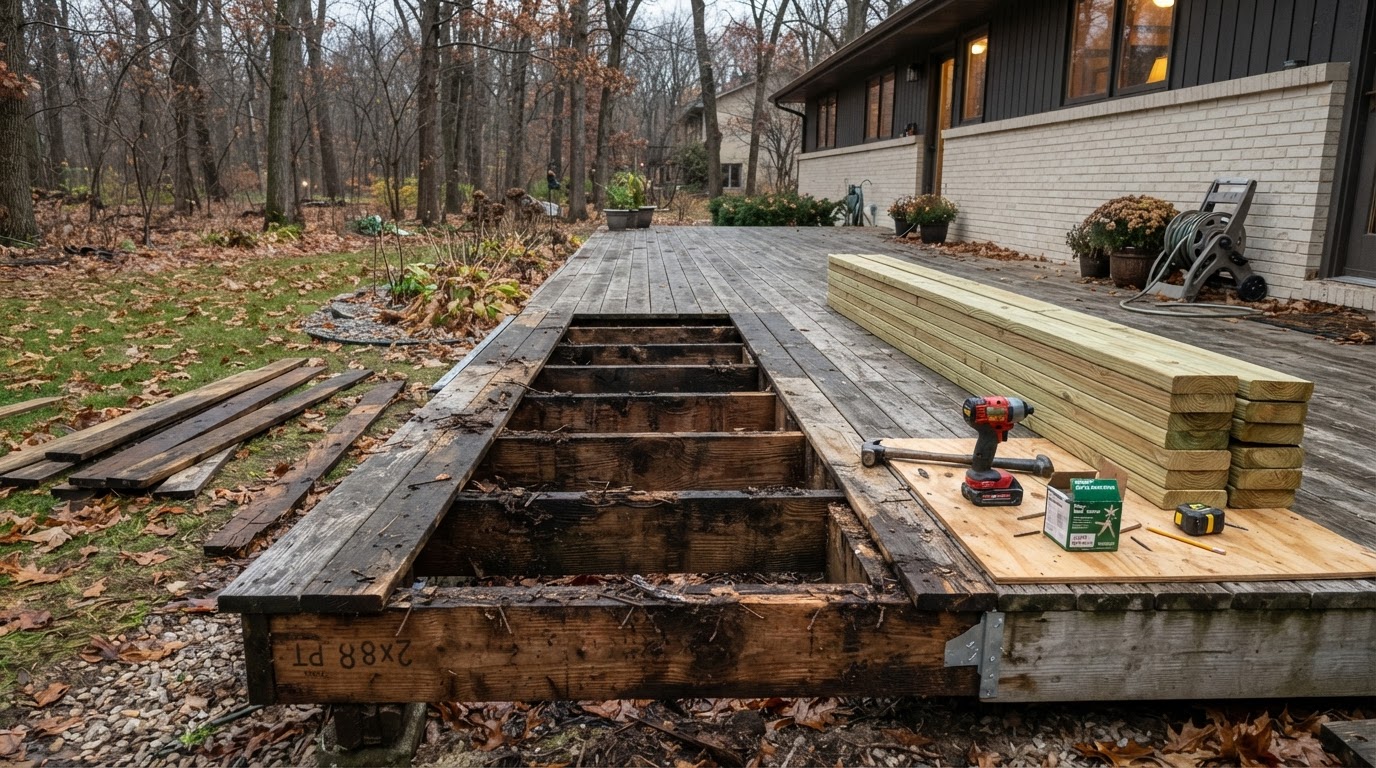
Deck Repair Across the St. Croix Valley. Honest Calls, Every Time.
Rotted boards, loose railings, sagging decks, failed fasteners. Shane Ward repairs decks across River Falls, Hudson, and western Wisconsin and tells you straight when repair makes sense and when replacement does.
What Shane Repairs on Western Wisconsin Decks
Rotted Board Replacement
Rotted deck boards at the ends, around fasteners, or across the surface. Shane replaces the damaged boards and inspects the framing underneath to make sure the rot has not spread where you cannot see it.
Loose Railing Repair
Wobbly railings, loose railing posts, and failed railing fasteners. A loose railing is a safety issue, not just a nuisance. Shane secures or replaces railing components so the railing is solid again.
Sagging and Structural Repair
Decks that bounce, sag, or have settled over time usually have undersized or failing posts, beams, or joists. Shane inspects the framing, identifies what is causing the movement, and repairs or reinforces the structure.
Failed Fastener Replacement
Popped screws, loose nails, and corroded fasteners happen after years of freeze thaw cycling. Shane replaces failed fasteners with hardware rated for Wisconsin winters so the repair holds.
Composite Deck Repair
TimberTech and Trex composite decks still need repairs when fasteners fail, railing posts loosen, or the underlying frame shifts. Shane repairs composite decking and identifies whether the issue is the boards or the structure beneath.
Full Deck Rebuilds
When a deck is too far gone to repair, Shane tears it out and rebuilds from the framing up. He will tell you straight when replacement makes more sense than patching, and quote the rebuild honestly.
When Does a Deck Need a Repair, and When Does It Need a Full Replacement?
A repair makes sense when the damage is isolated. A few rotted boards, a loose railing section, or popped fasteners on an otherwise solid frame can be fixed without rebuilding the whole deck. If the framing is sound, a board level repair gets you several more years out of the structure.
Replacement makes sense when the problems are structural. Widespread rot across the surface, sagging or bounce in the frame, failing posts, or a deck that is more than 20 years old with original framing usually mean a repair is just delaying a rebuild you will need anyway. Patching a failing frame costs more in the long run than doing it right once.
Shane assesses every deck in person during the free estimate. He inspects the boards, the framing, the posts, and the ledger board, then gives you an honest recommendation and a written estimate for whichever option makes sense for your deck and your budget. No upselling.
Signs Your Deck Needs Repair Before It Gets Worse
Soft or spongy boardsBoards that flex underfoot or feel soft when pressed usually have rot inside the wood. Left alone it spreads to the framing underneath.
Cracks across the surfaceCracks running through deck boards, especially at the ends and around fastener holes, are a sign of freeze thaw damage and aging wood.
A wobbly or bouncing railingA railing that moves when you lean on it is a safety issue. The posts or fasteners have failed and need to be secured or replaced before someone gets hurt.
Sagging or bounce in the deckA deck that sags, bounces, or feels unstable underfoot has a framing problem. The posts, beams, or joists may be undersized, failing, or settled.
Popped or corroded fastenersScrews backing out and nails pulling loose are signs the fasteners are failing. Corroded hardware leaves dark stains and weakens the connection over time.
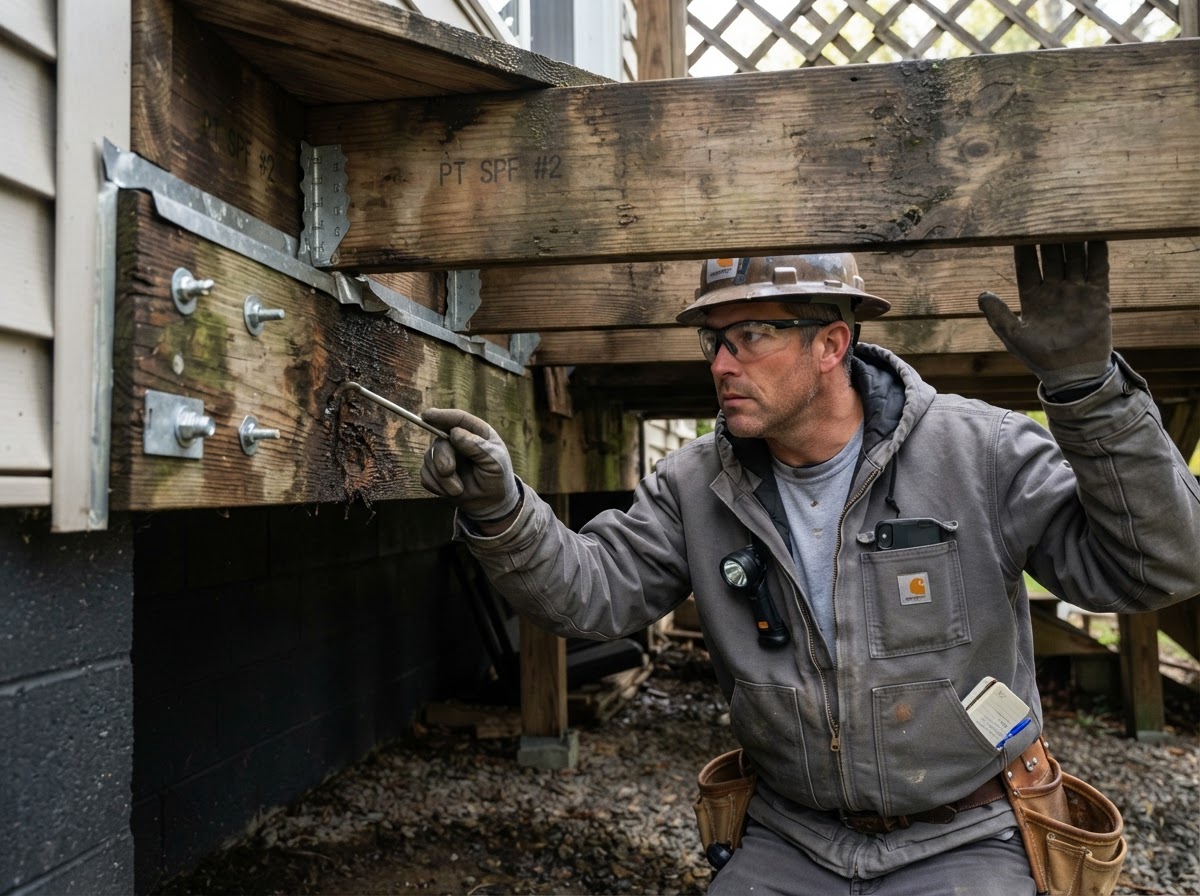
Rot at the ledger boardRot where the deck attaches to the house is the most serious warning sign. A failed ledger board can pull the deck away from the house. Have it inspected immediately.
Why St. Croix Valley Homeowners Call Shane for Deck Repairs
Honest Repair vs. Replacement Calls
Shane tells you when a repair makes sense and when a full rebuild is the better investment. He does not push you toward the more expensive option to pad the invoice.
He Inspects the Framing, Not Just the Boards
A board level repair only lasts if the framing underneath is sound. Shane inspects the joists, posts, and ledger board before recommending a board only fix.
Shane Is On Every Job
Shane Ward does not send a crew and disappear. He is on site, doing the assessment and the repair, and accountable for every detail from start to finish.
Financing Available
Larger deck repair and rebuild projects can be financed through Wisetack. Ask Shane about your options when he comes out for your free estimate.
Why Wisconsin Decks Break Down Faster Than Homeowners Expect
Deck damage in western Wisconsin is not random wear and tear. It follows predictable patterns driven by the climate, the soil, and how the deck was originally built. Knowing what is actually causing the damage is the difference between a repair that lasts and one that fails again next winter.
Freeze-Thaw Cycling
Snow melts into cracks and screw holes during the day and refreezes overnight, prying the wood apart a little more each cycle. Over a decade of Wisconsin winters, that cycling breaks down wood fibers and widens every gap until boards, posts, and the ledger board start failing.
Moisture and Poor Drainage
Water that sits on a deck instead of running off it does the real damage. Debris between boards, inadequate spacing, and flat or back-pitched surfaces all trap moisture against the wood. Shane checks drainage and slope on every deck he assesses, because a drainage fix prevents the same rot from coming back.
Snow Load Stress
Western Wisconsin ground snow loads run 30 to 50 pounds per square foot. A deck that was built light or has settled over the years can sag, bounce, or pull away from the house under that load. Undersized posts, beams, and joists are the usual culprit, and the problem gets worse every winter it is left alone.
Ledger Board and House Connection
The ledger board, where the deck attaches to the house, is the most common point of failure and the most dangerous. Rot behind the ledger can pull the whole deck away from the wall. Shane inspects the ledger, the hardware, and the flashing on every assessment, because a failed ledger is a collapse risk, not just a repair.
Our Deck Repair Process, Start to Finish
No surprises and no runaround. Here is exactly what happens from your first call to the final walkthrough.
Free On-Site Inspection
Shane comes out, walks the deck with you, and inspects the boards, framing, posts, ledger board, railings, and fasteners. He identifies what is actually causing the damage, not just the visible symptom.
Honest Repair vs. Replacement Call
He tells you straight whether a repair makes sense or whether the framing is too far gone and a rebuild is the better long term investment. No upselling, no padding the invoice with work you do not need.
The Repair Work
Shane and his crew do the repair with hardware rated for Wisconsin winters. Board replacement, railing repair, structural reinforcement, and fastener replacement, done right so the fix holds.
Walkthrough and Follow-Up
Shane walks the finished repair with you, shows you exactly what was done, and handles any required permitting and cleanup. You get a written estimate up front and a straight answer at the end.
Deck Materials We Repair and Replace
Shane repairs every common deck material used across western Wisconsin. The right repair depends on what your deck is built from and how it has aged.
Pressure Treated Wood Decks
The most common deck material in Wisconsin and the most prone to rot, splitting, and fastener failure after years of freeze thaw cycling. Shane replaces rotted boards, secures loose boards, and reinforces the framing so a pressure treated deck keeps holding up.
Trex Composite Decks
Trex composite decking resists rot and insects, but the fasteners, railing posts, and underlying frame still fail over time. Shane repairs Trex decks, replacing damaged composite boards and securing the structure underneath so the surface stays solid.
TimberTech Composite Decks
TimberTech composite holds up better to Wisconsin moisture than wood, but the framing and railings still need attention. Shane repairs TimberTech decks, replacing failed fasteners and reinforcing the structure so the deck performs the way it was designed to.
Areas We Serve
Deck Repair FAQs
Deck Repair FAQs
Is my old deck better off repaired or fully replaced?
A repair is the right call when the framing is still solid and the damage is limited to surface boards, a loose railing section, or failed fasteners. A full replacement makes sense when you are seeing widespread rot, sagging or bounce in the frame, failing posts, or original framing past 20 years. Shane inspects the boards, joists, posts, and ledger board in person during the free estimate and gives you an honest, written recommendation for whichever option protects your investment long term, no upselling.
Can you fix a deck that is sagging, bouncy, or pulling away from the house?
Yes. Sagging and bounce usually mean the posts, beams, or joists are undersized for the snow load or have settled over time. Shane inspects the framing, identifies what is causing the movement, and reinforces or replaces the structural members so the deck is solid again. If the framing is too far gone, he tells you straight that a rebuild is the better long term investment than a patch that fails next winter.
How do you stop deck boards from rotting again after a repair?
By fixing the cause, not just the symptom. Rot in Wisconsin decks comes from moisture trapped by freeze thaw cycling, poor drainage, debris between boards, and inadequate spacing. Shane checks the slope and drainage on every repair, replaces the rotted boards, and spaces the new boards correctly so water runs off instead of sitting against the wood. A drainage fix prevents the same rot from coming back.
Can you replace just the rotted boards on a pressure treated or composite deck?
Yes. When the framing underneath is still sound, Shane replaces rotted pressure treated boards, failed Trex or TimberTech composite boards, and loose fasteners without tearing out a deck that still has good bones. He inspects the joists, ledger board, and posts first to confirm the structure underneath is solid before recommending a board level repair.
What does deck repair cost in western Wisconsin?
Deck repair cost depends on how much of the deck is damaged and whether the framing is involved. Isolated board and fastener replacement on a small section typically runs a few hundred to a few thousand dollars, while structural repairs involving posts, the ledger board, or joists run higher. Shane hands you a detailed, written estimate before any work starts so you know exactly what you are paying for.
Do I need a permit for deck repair in St. Croix, Polk, Pierce, or Dunn County?
Board level repairs and fastener replacements usually do not need a permit. Structural repairs to posts, the ledger board, joists, or a full rebuild typically do. Shane knows the local requirements across St. Croix, Polk, Pierce, and Dunn counties and handles all required permitting as part of the project so you never deal with the building department yourself.
How long does a deck repair take?
Most deck repairs take one to two days. Isolated board and fastener work can be finished in a day, while structural repairs or larger board replacements take longer. Shane gives you a realistic, written timeline during the free estimate so you know exactly when the deck is back in service.
Can you repair composite decks like Trex and TimberTech?
Yes. Shane repairs Trex and TimberTech composite decks, replacing damaged composite boards, securing loose sections, and repairing railing systems. Composite resists rot better than pressure treated wood, but the fasteners, railing posts, and underlying frame still fail over time and need attention to keep the surface solid.
Does Ward Exterior Works offer financing for deck repair?
Yes. Financing is available through Wisetack for qualifying deck repair and rebuild projects. Shane walks you through the options when he comes out for your free estimate at 715-808-5260.
How do I get a deck repair estimate in western Wisconsin?
Call or text Shane at 715-808-5260, or use the contact form on this site. He comes out, inspects the deck in person, identifies what is actually causing the damage, and hands you a written estimate before any work starts. No pressure, no sales pitch.
Not Sure If Your Deck Needs a Repair or a Full Rebuild?
Call Shane at 715-808-5260 or request a free estimate online. He comes out, inspects the deck in person, and gives you an honest answer and a written price before any work starts.
